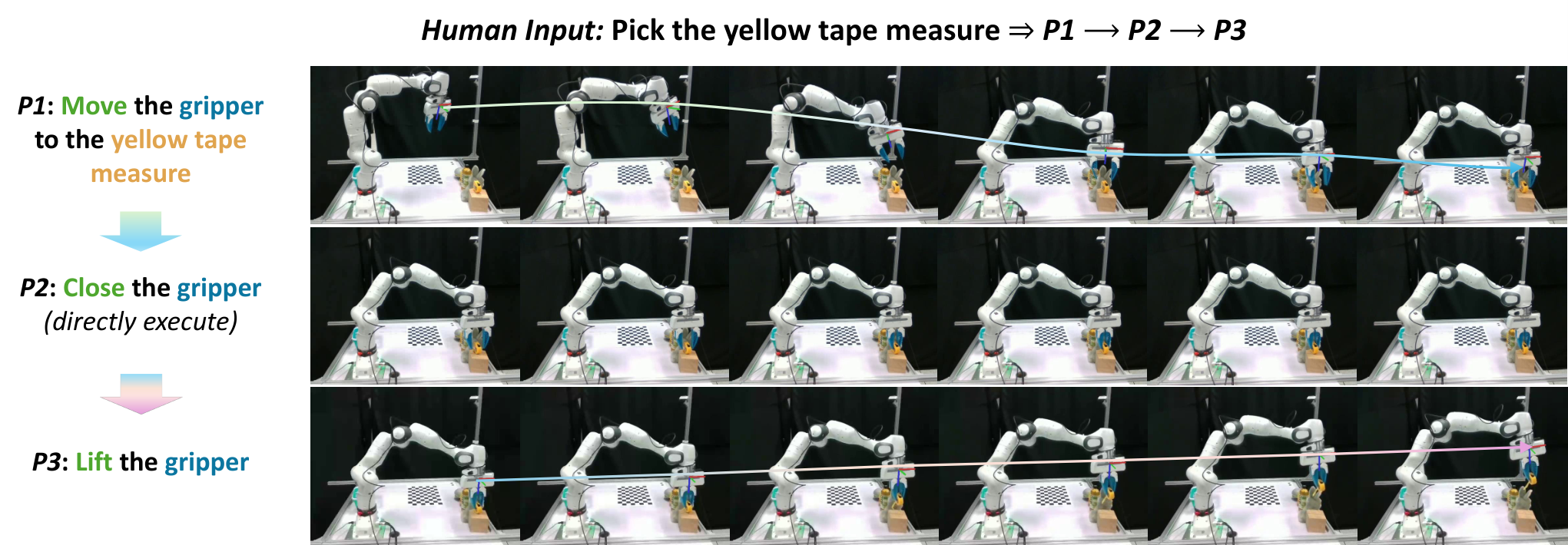
Primitive-centric robot learning
Learning Primitive Embodied World Models
Towards Scalable Robotic Learning
The central observation
Behavior is combinatorial.
Motion primitives are not.
Embodied trajectories are sparse and expensive, while the space of reusable primitive motions is comparatively small. PEWM restricts generation to short, semantically atomic transitions, creating a denser interface between language, video, and action.
A high-level VLM acts as the planner. A compact video world model acts as the fast, reactive dynamics module. The two meet through language and spatial start-goal grounding.
Method
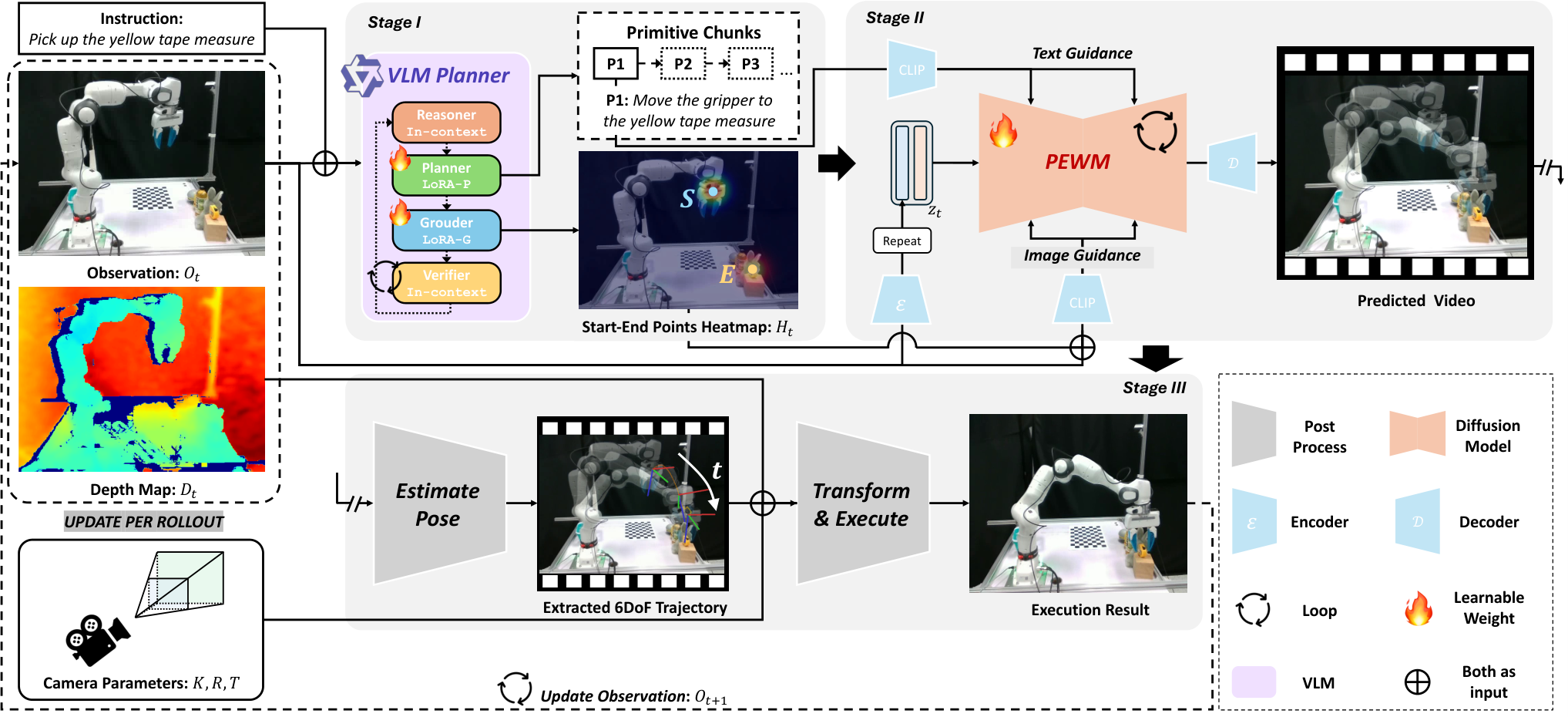
Plan locally. Generate precisely. Compose indefinitely.
-
01
Primitive data
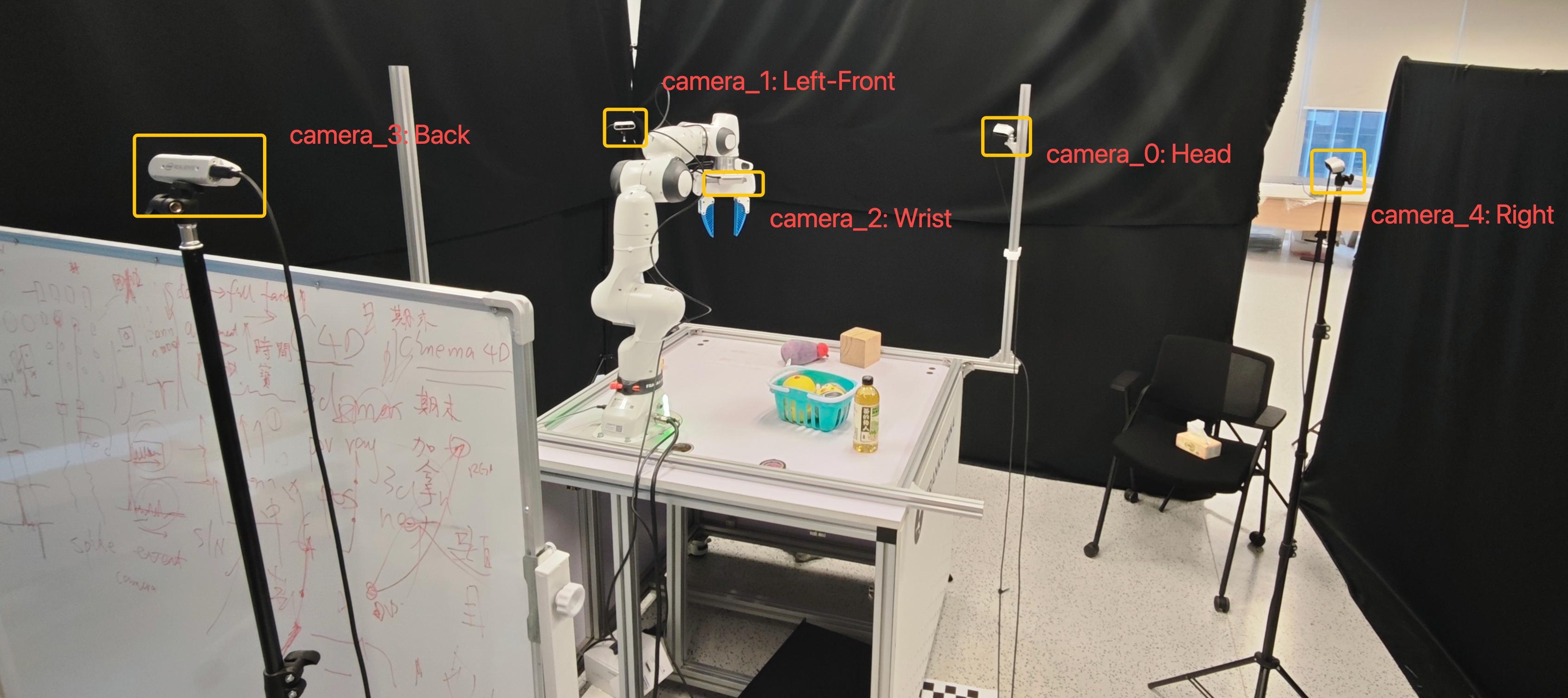
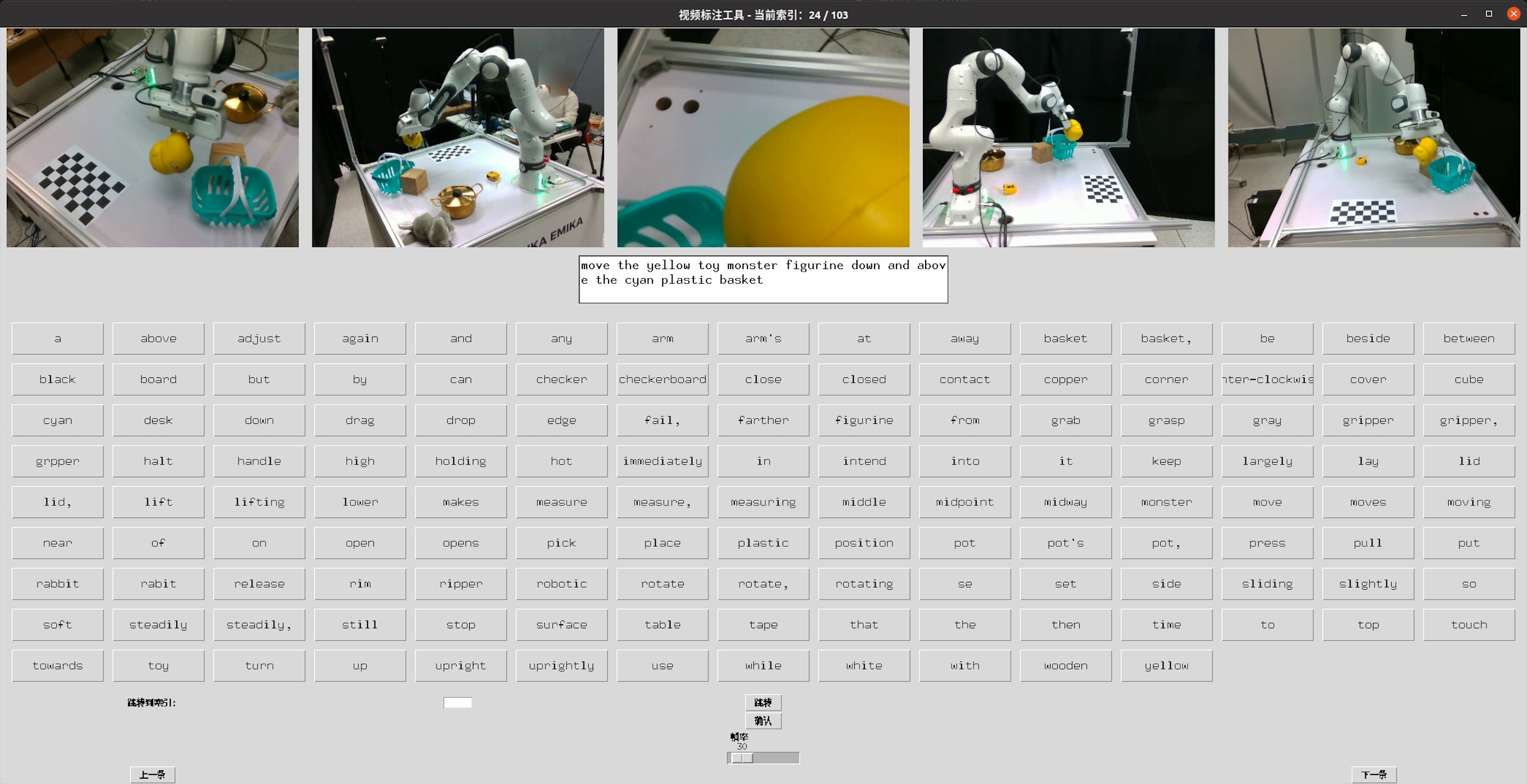
Five synchronized views, on-the-fly temporal boundaries, one shared language label, and full-arm visibility turn each session into multiple dense training units.
-
02
Spatial generation
DynamiCrafter predicts a 32-frame visual rollout from the current image, primitive instruction, and signed Gaussian Start-Goal Guidance.
-
03
Visual action
Gen6D estimates gripper pose from generated RGB, followed by scale alignment, pose filtering, and transformation into Cartesian execution space.
-
04
Closed-loop composition
Qwen2.5-VL decomposes long tasks and replans after each real execution. Symbolic gripper actions bypass video generation.
Primitive embodied data
Designed for density, not just scale
Every real episode is captured by five cameras and split at teleoperation button events. One instruction supervises every synchronized view. Simulation supplies clean kinematics; real data supplies appearance and true dynamics.
- 11,465
- real primitives
- 7,326
- simulated primitives
- 5.8
- primitives per session
- 29×
- collection efficiency
Qualitative rollouts
Short motions become reusable visual actions
Selected simulation and real-world generations from the authors' original PrimitiveWorld project page. The labels below follow that source.
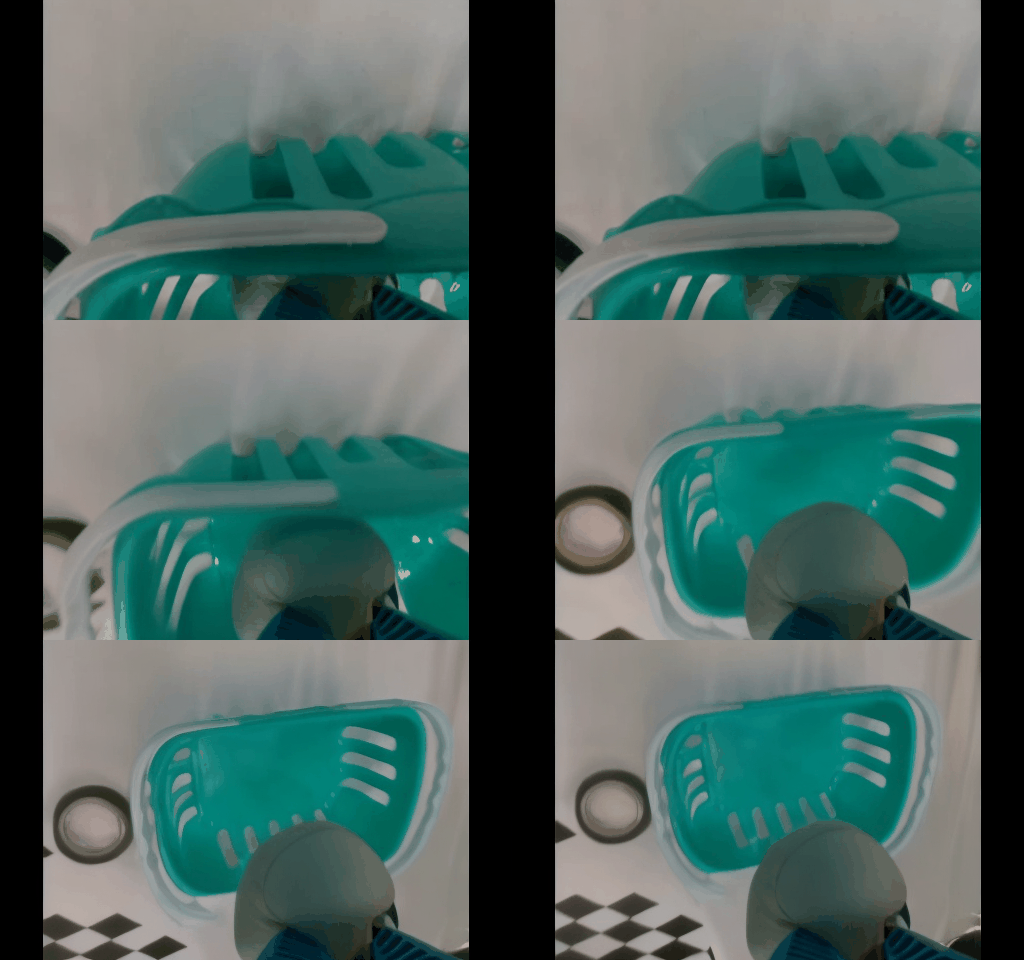
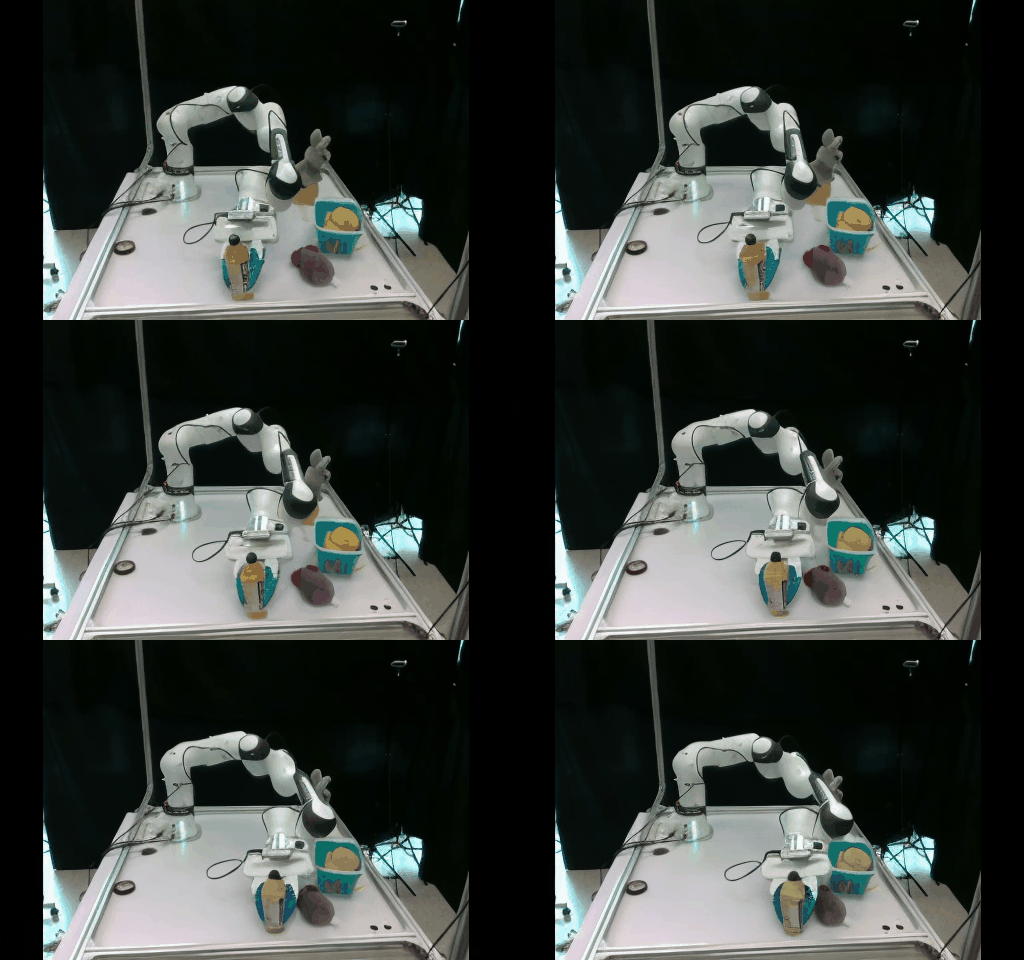
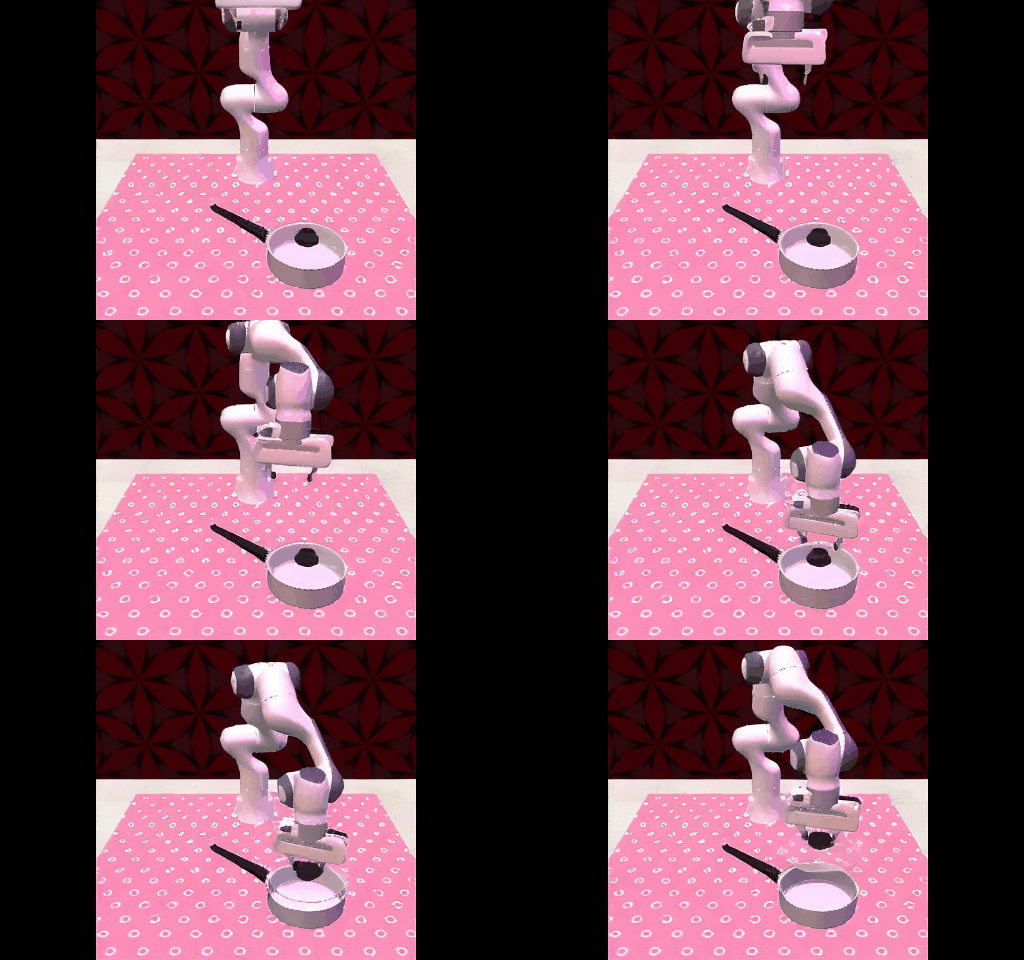
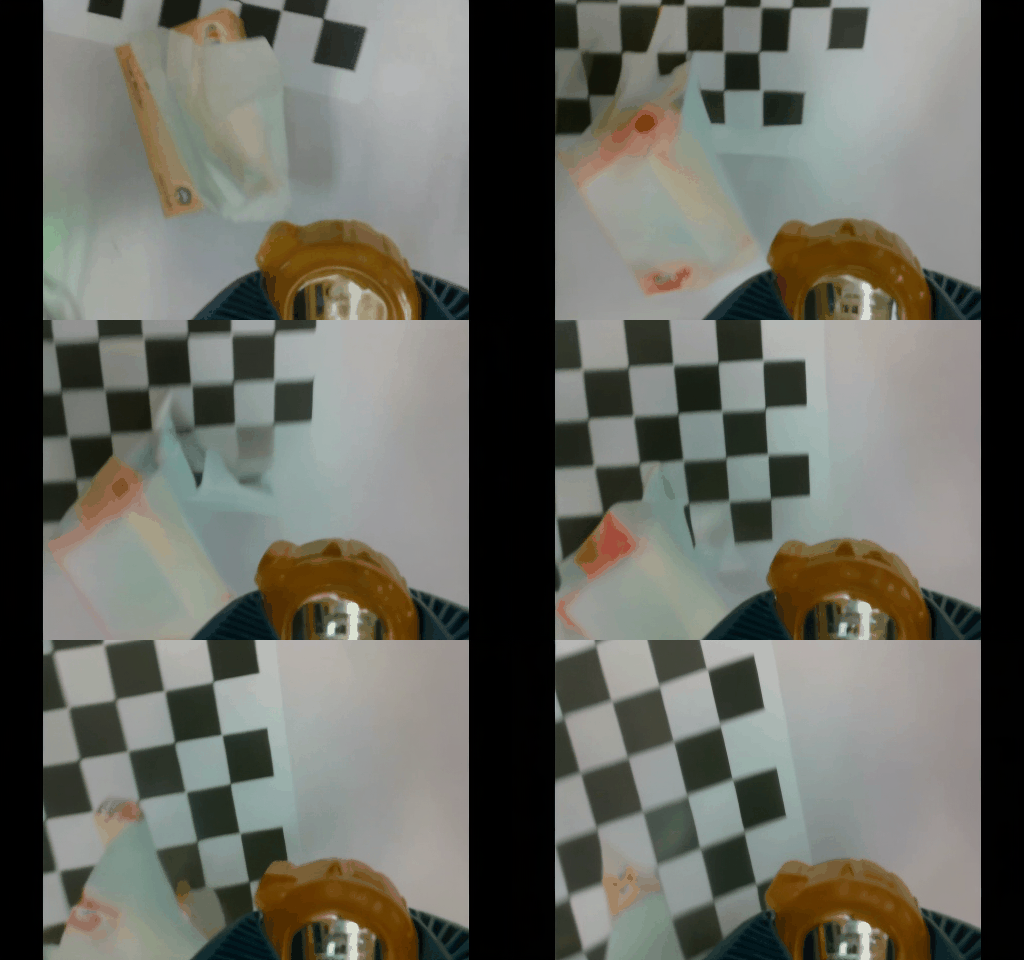
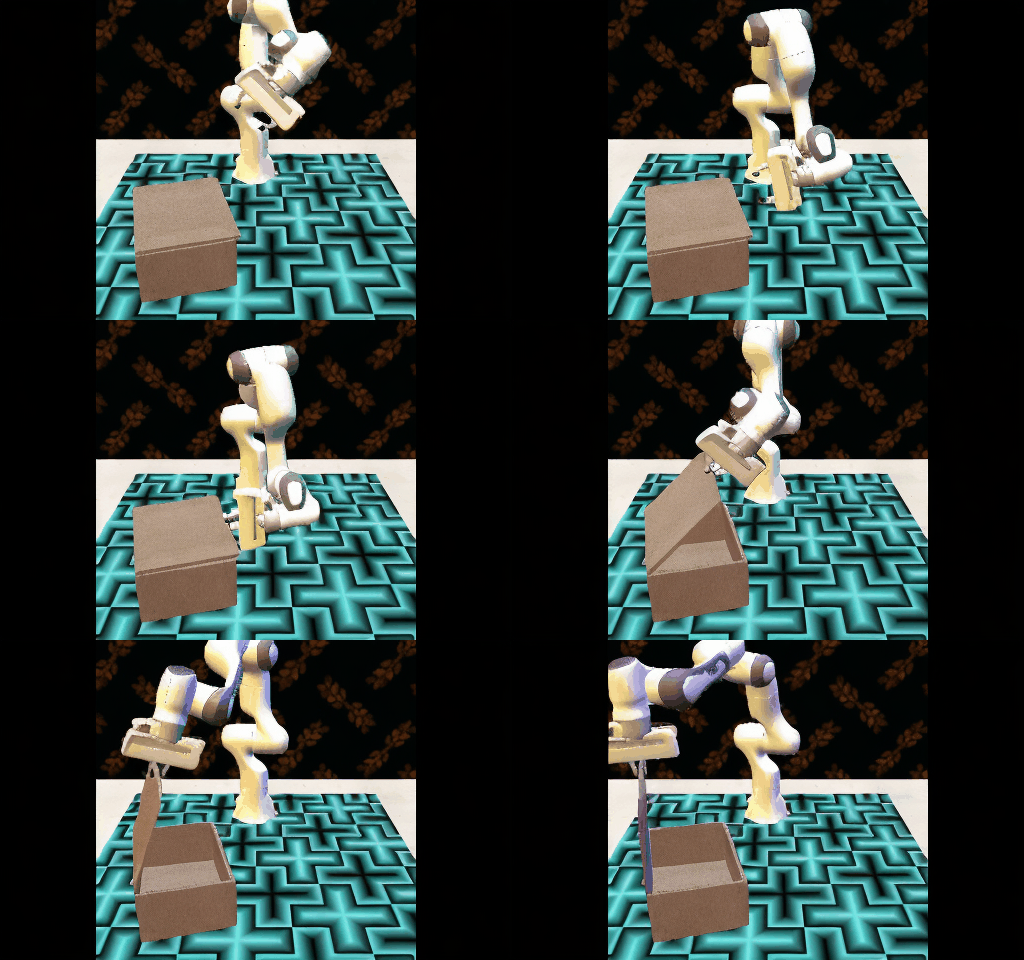
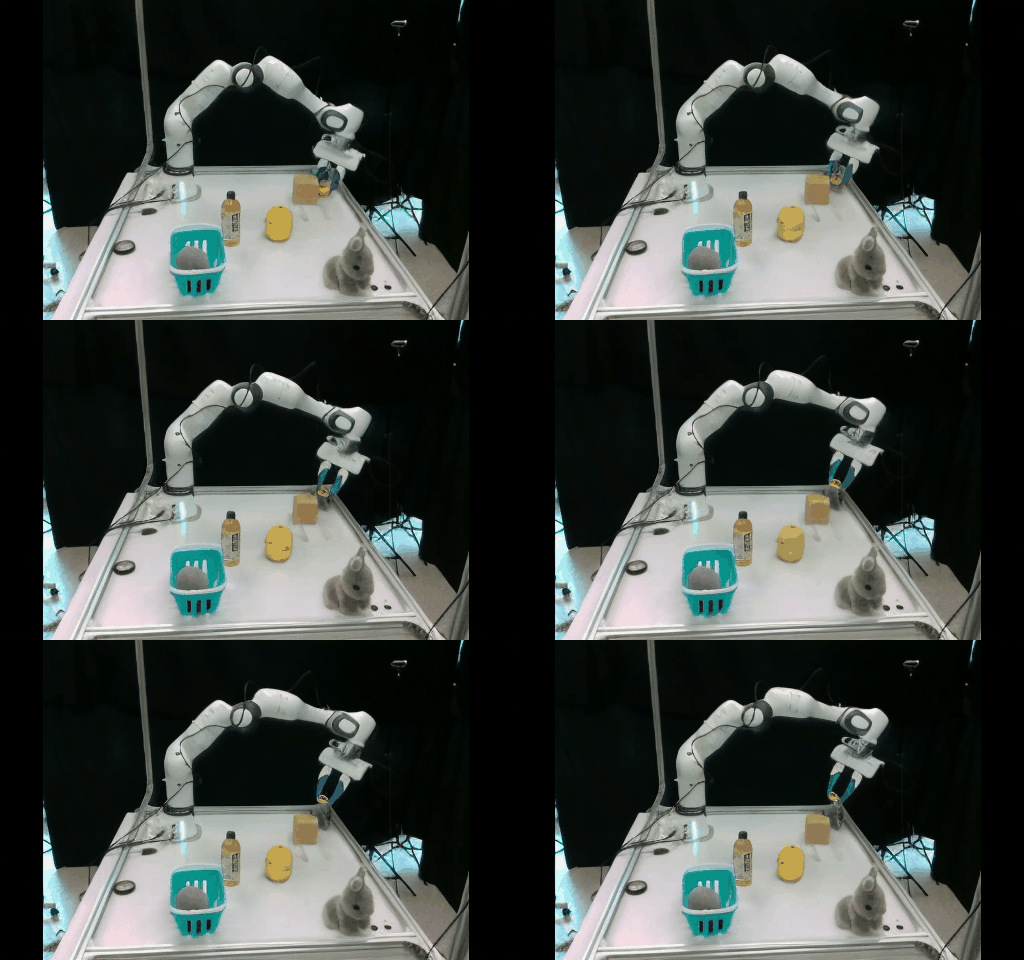
Original media: PrimitiveWorld at commit ce98058. These are project artifacts, not outputs regenerated by the dependency-light smoke backend in this repository.
Results
Compact generation with physical utility
Paper-reported results on 32-frame sequences and real-robot tasks. The released code keeps these separate from integration-only smoke tests.
| Task | Planning | Frame realism | Execution |
|---|---|---|---|
| Pick up cup | 18 / 20 | 17 / 20 | 16 / 20 |
| Move cloth | 16 / 20 | 15 / 20 | 14 / 20 |
| Fold cloth | 15 / 20 | 14 / 20 | 13 / 20 |
Model1.4BDynamiCrafter denoiser
Memory11 GBA100 VRAM reported
Rollout16 s32 frames, base model
Causal12 FPSdistilled student reported
Open resources
Reproduce the interfaces today. Fill in the learned artifacts transparently.
PaperarXiv:2508.20840
CodeData, planning, generation, pose, control
ModelsDynamiCrafter, causal student, LoRA-P, LoRA-G
Model cardHugging Face release template
The implementation labels missing paper artifacts explicitly. Compatibility backends such as Wan are provided for local integration tests, never presented as the trained PEWM model.